
AbleNomads
The world doesn’t end where accessibility does.
There are places we want to discover, places we want to go back to, and places we would simply like to experience a little more fully. Access is usually treated as a precondition: either it is already there, or the trip doesn’t happen.
AbleNomads starts somewhere else. The gap between “I want to go” and “I can go” deserves attention, imagination and the help of people who actually know.
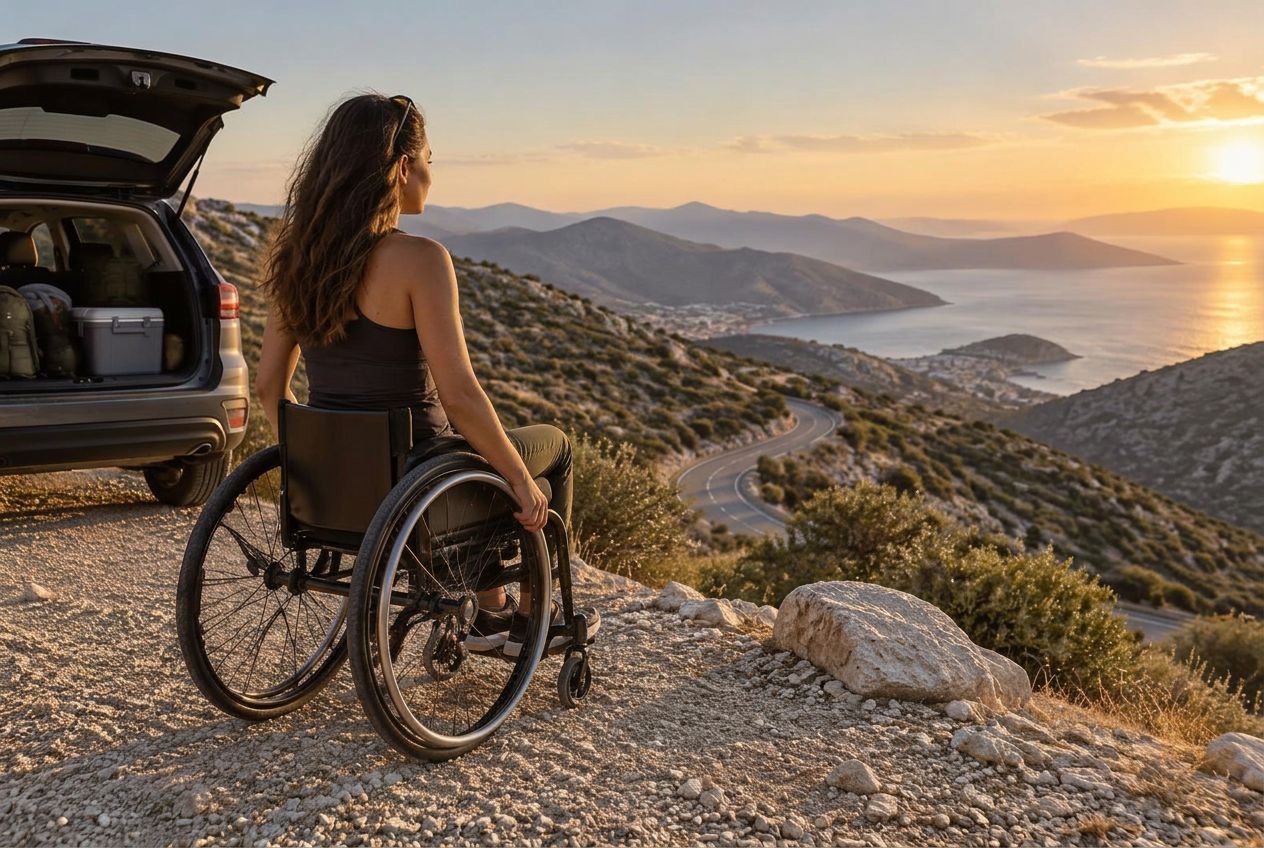
01Beyond the familiar map
A place can be on the map and still missing from your life.
A mountain village, a path down to the sea, an archaeological site, the square where your parents grew up. They are described in photographs, distances and opening hours. They are rarely described by the things that decide whether you can actually be there: the gradient of the street, the three steps at the door, whether there is anywhere to pause.
The distance between a place that exists and a place that is genuinely accessible appears in no guidebook. Yet for many people it quietly decides where they go, where they never think of going, and what stays forever on the “some other time” list.
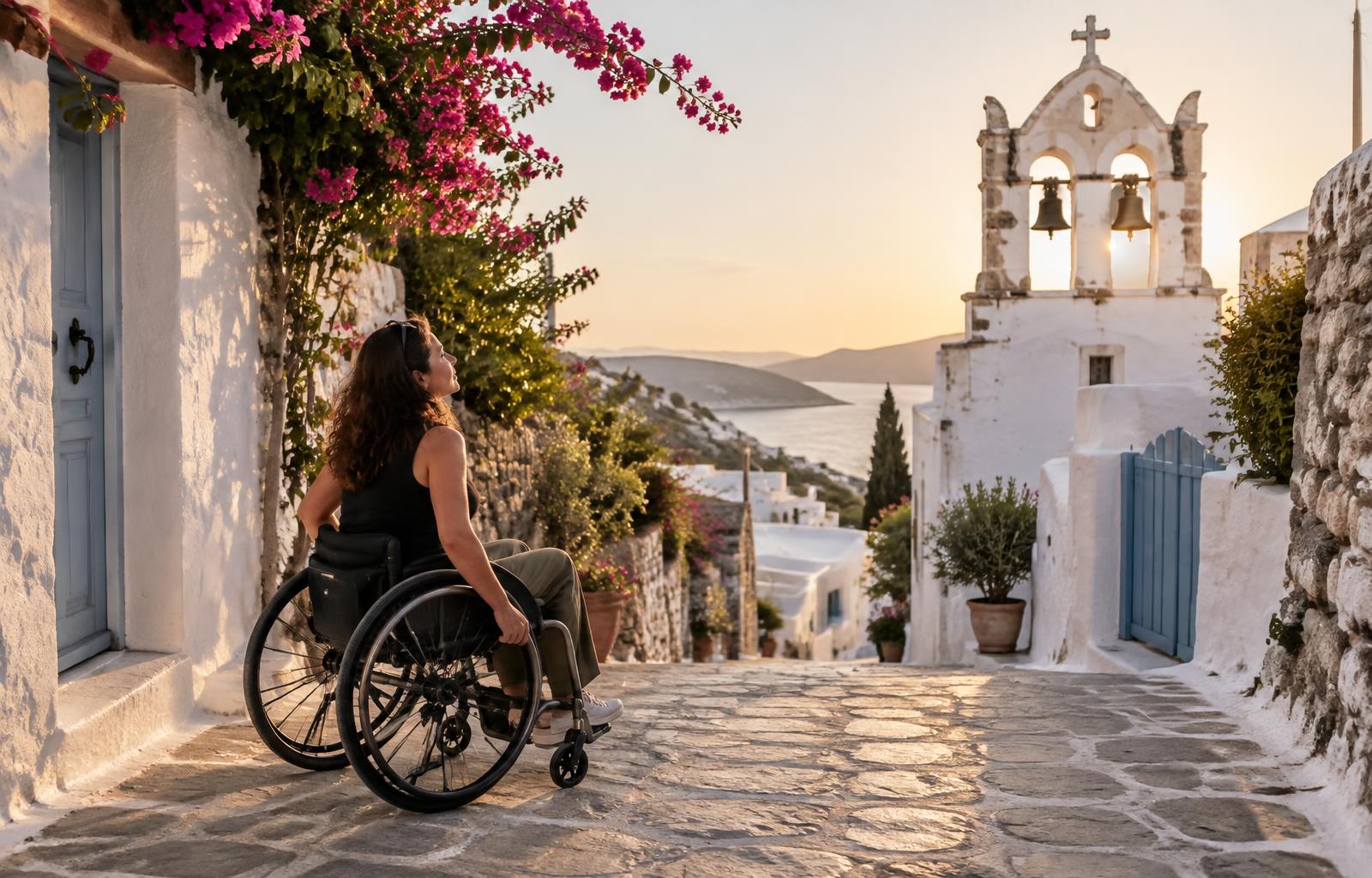
02The freedom to participate
This was never only about holidays.
Going somewhere means much more than a trip. It means being at the village festival, the concert, the Saturday market. Meeting people, trying something new, returning to a place that matters to you.
Access, here, is about autonomy and choice: deciding for yourself where to go, when and how — on your own terms, not on the terms someone else anticipated for you.
Accessibility doesn’t stop where the pavement ends.
03The overlooked places
Access is not shared out evenly.
Big cities and well-known destinations tend to attract most of the attention, most of the infrastructure and most of the information. Elsewhere the picture is more complicated. Some small communities offer remarkable hospitality and almost no information; some places are far more accessible than anyone assumes — it’s just that nobody has written it down.
We are not interested in labelling places. We want to understand what is missing to make taking part straightforward — and what is already there, unknown.
04A different question
Possibility starts with a different question.
“Is it accessible?” usually gets a yes or a no, and the conversation ends. We are more interested in the question after it: what would it take?
The answer is rarely single. It comes from careful observation, practical knowledge, design that respects a landscape and the people in it, and above all from collaboration. It is slow work. It is also the only kind that lasts.
05Local knowledge
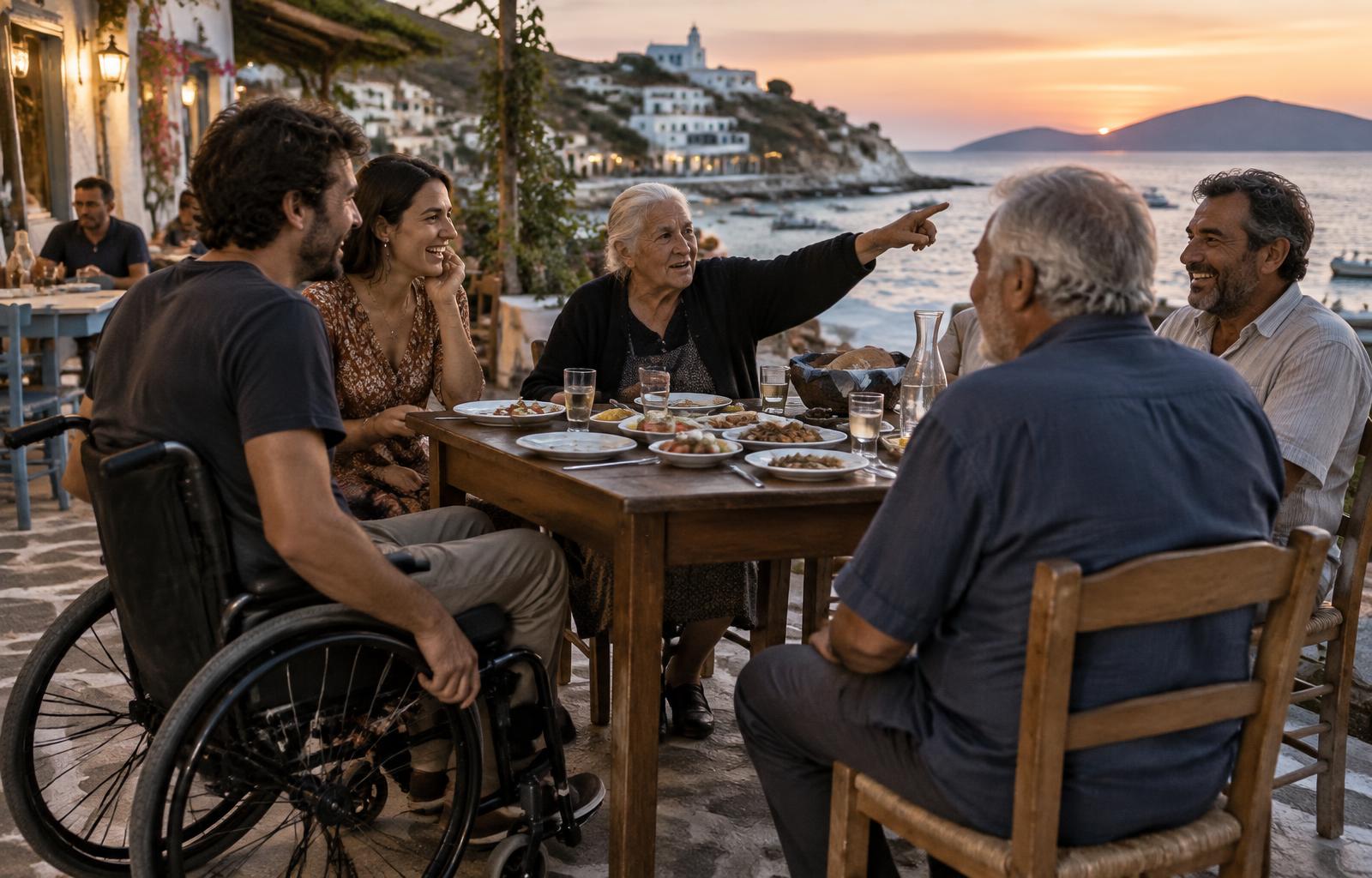
Nobody knows a place better than the people who live there.
The fisherman knows which path is smooth. The café owner knows where a table can sit on level ground. And someone who moves by wheelchair can see at a glance what no plan would ever show.
A meaningful conversation about access needs both kinds of knowledge: the knowledge of a place and the knowledge of lived experience. Nothing about us without us — and nothing about a place without its people.
06Where it begins
An idea worth exploring.
AbleNomads is an initiative being developed within iCanotita. It is not a travel agency and it takes no bookings.
What it has is a clear ambition: to investigate, test and encourage more opportunities for access and participation where they are rare today. It will do so gradually, working with the people of each place.
Know a place worth exploring?
A place, a barrier you can’t stop noticing, some expertise or an idea for working together. Tell us which place you have in mind.