
iCan Lab
Every good idea begins with a question worth asking.
So much of what doesn’t work around us has become so familiar that we no longer see it. A public space designed for a few. A process that wears people out for no reason. An environmental opportunity missed because nobody thought to ask. These things look inevitable — often only because no one has looked at them from another angle.
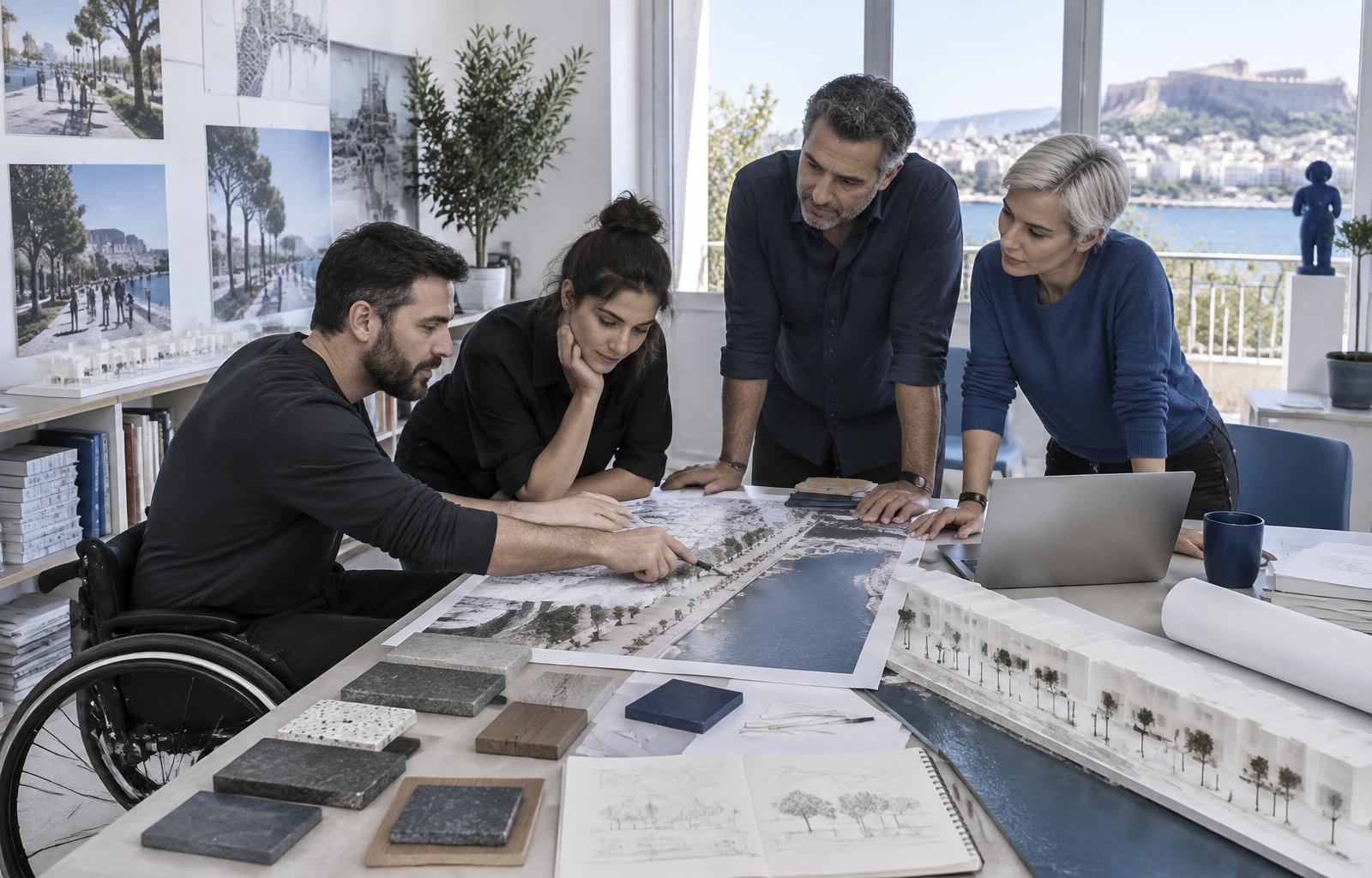
iCan Lab makes room for that look. Here we try to ask better questions, bring together people who see the same problem differently, and work out what could, in practice, be done better.
01The Lab
Where curiosity meets practical thinking
iCan Lab is an iCanotita initiative for examining questions, connecting perspectives and working on ideas that could improve something specific. It serves all three of our areas with equal seriousness: accessibility and disability inclusion, the environment, and animal protection and care.
The Lab is, above all, a way of working: careful, interdisciplinary and a little stubborn.
02The method
Six moves, one direction
It isn’t a recipe. It’s the order in which we try to think — and we often step back before moving on.
Observe
We notice what most of us have learned to walk past.
Question
We ask why something is done this way, and whether it could be different.
Connect
We bring knowledge and experience to the same table that rarely meet.
Design
We give the idea a shape: a sketch, a proposal, an alternative.
Test
We put it up against reality before we decide it’s right.
Act
If it holds, it becomes a next step. If not, we learn why.
03Observe
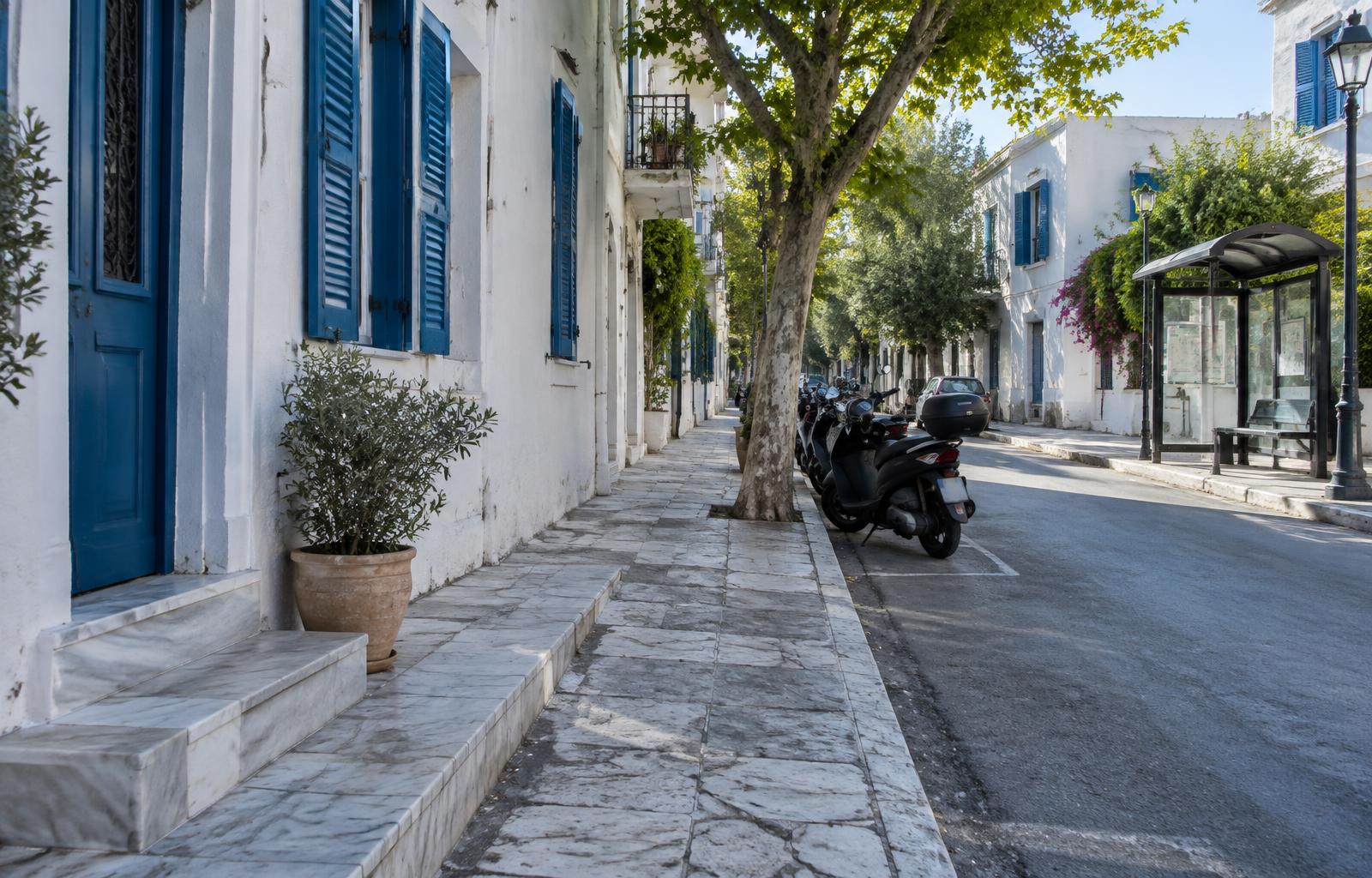
Sometimes the beginning is simply paying attention.
A promenade, a bus stop, an online form, a feeding spot for strays: each hides details worth a second look. Where something doesn’t work. Where complexity piles up. Where someone is left out without anyone ever having decided it.
Observation isn’t proof; it’s a starting point. It tells us where to look more closely, not what to conclude. So we record what we see as clearly as we can, and leave conclusions for later.
04Question
“That’s how it’s done” isn’t always an answer.
Many of the solutions we see every day made sense when they were designed. But needs change, people change, the climate changes. A habit can be widely accepted without being the best it could be.
We don’t start from the assumption that everything is wrong. We start from a more interesting question: who was this designed for, and who did it forget? Often, simply reframing a problem is enough to reveal a route that wasn’t there before.
05Connect
Ideas get more interesting when they meet.
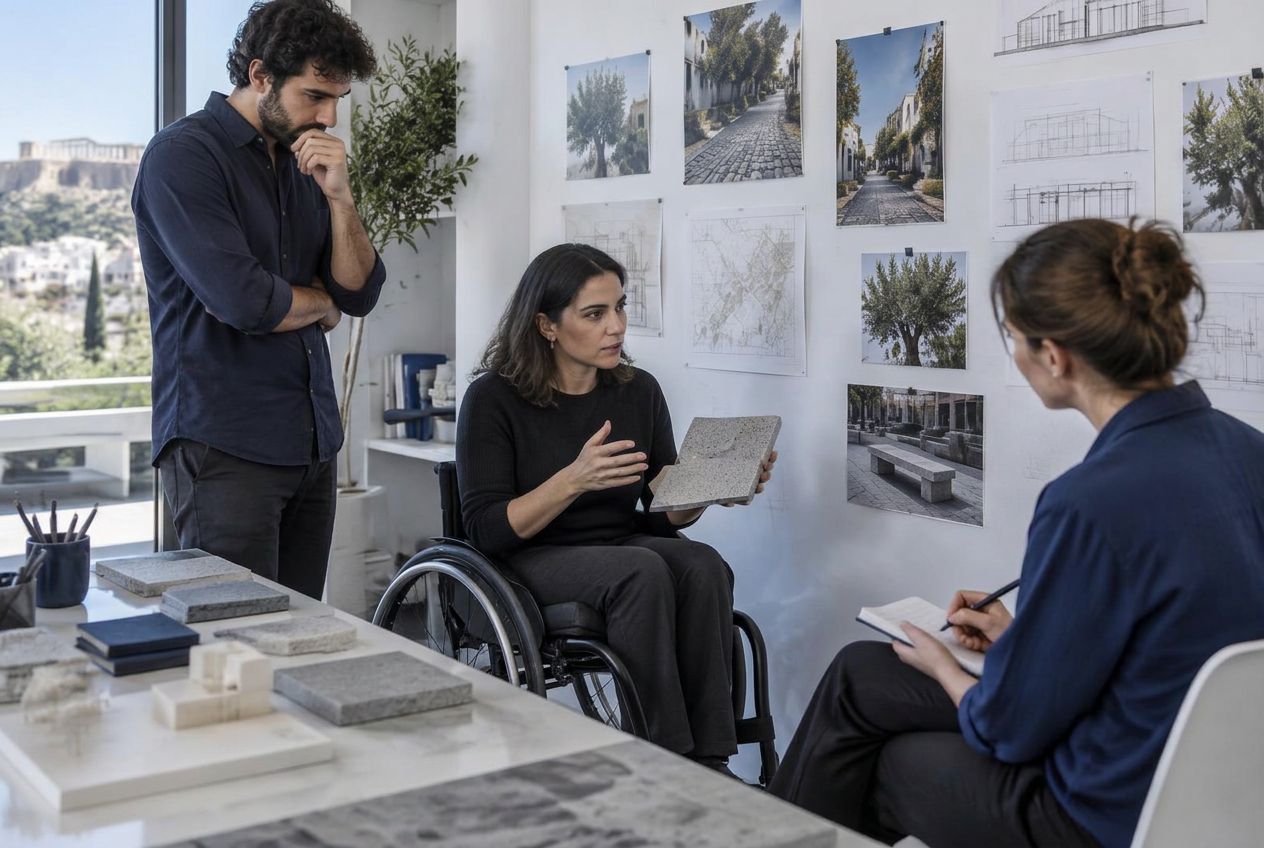
A problem rarely has just one dimension. A paving choice is about design, but also cost, maintenance, rainwater, the roots of the tree next to it and the person moving in a wheelchair.
That’s why no single profession sees the whole picture. We want designers, researchers, practitioners, people with lived experience, local communities and organisations around the same table — each with an equal voice in the conversation.
We don’t need to know the answer for the question to be worth asking.
06Design · Test
Plenty works on paper. Reality has the final say.
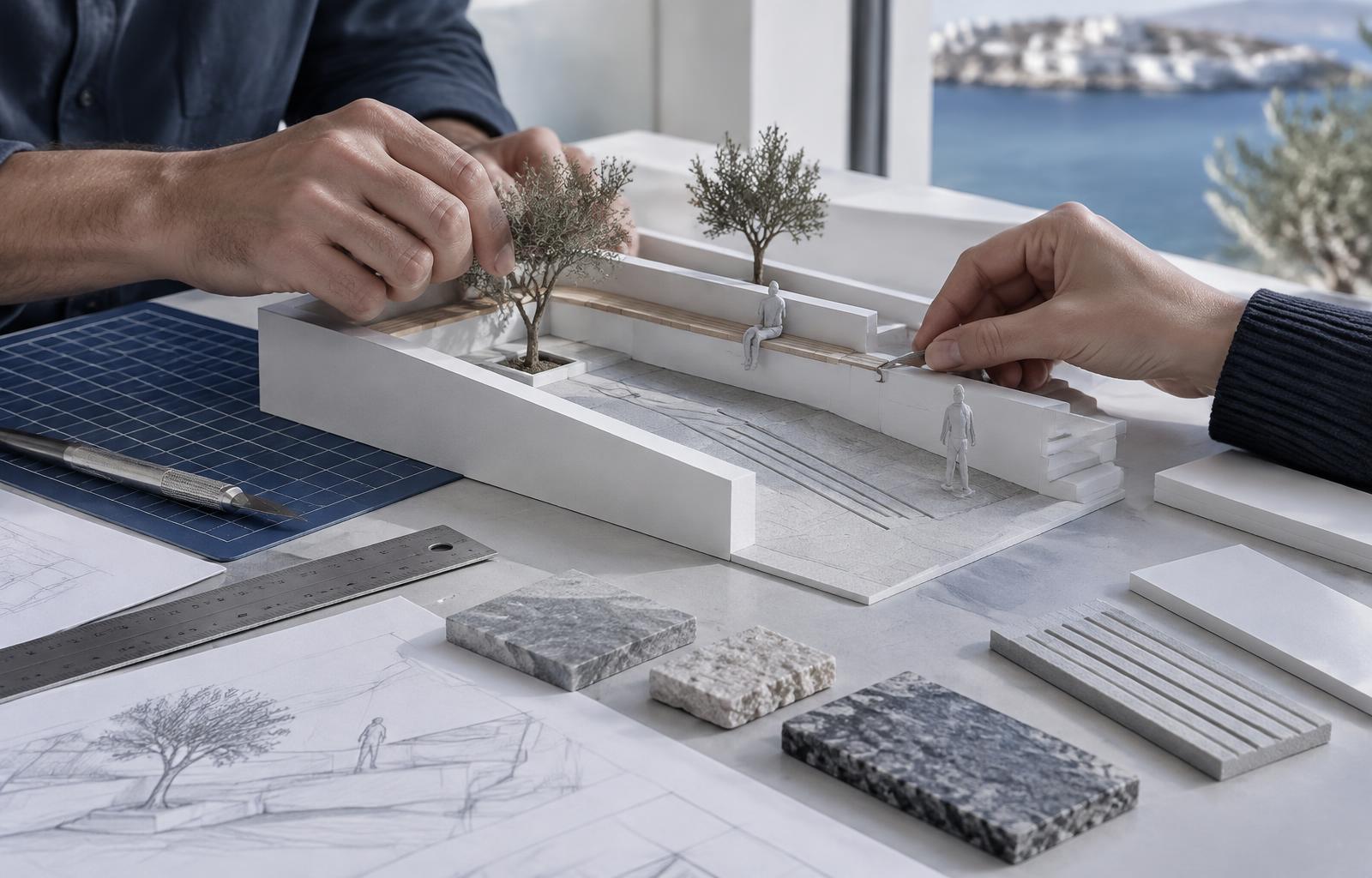
An idea gains value once it starts to take shape: a sketch, a clearer proposal, an alternative layout, a visual model, something that explains to others what we mean. These are our tools for thinking out loud. Technical studies are for those qualified to sign them.
Then comes the hard question: would it hold up in the real world? We look at practical constraints, safety, maintenance, durability and the surrounding environment — but above all at how it feels to the people who would use it.
07Act
Thinking deserves to get out into the world.
A good idea can become a clearer proposal, a useful conversation, a practical recommendation, an opportunity to collaborate or a carefully planned initiative. It can also lead to more investigation — which matters just as much.
The ideas that deserve it don’t stay theoretical for long. What the Lab is working on right now, we’ll present when it’s ready.
Have an idea worth exploring?
An observation, a question, a skill or an experience that could make the difference. Share your idea with us.