
Accessibility & Inclusion
Being open isn’t enough. A place has to be usable.
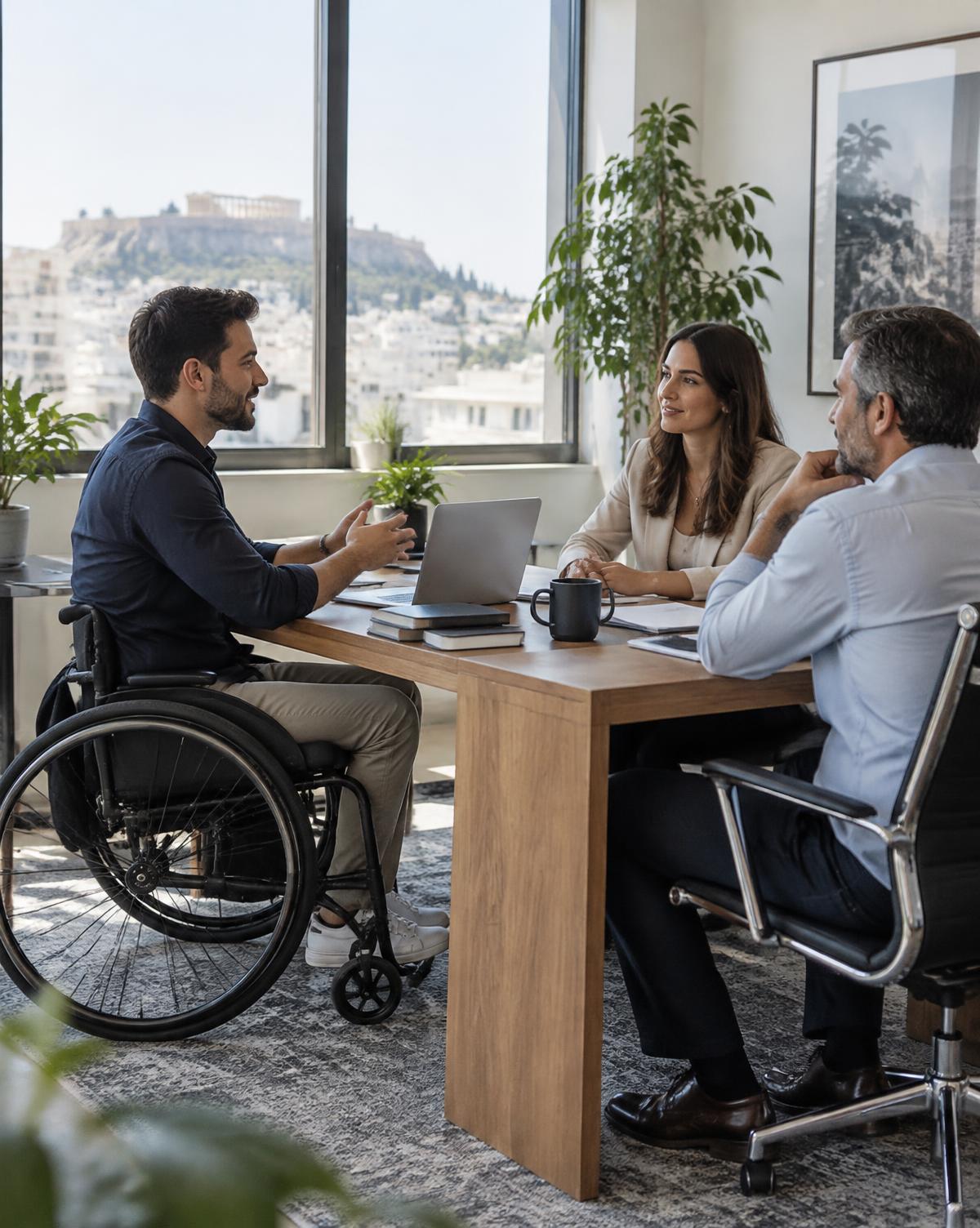
Access isn’t settled at the front door or by the presence of a ramp. It’s decided along the whole route: from the pavement to the service counter, from the signage to the online form, from the meeting invitation to an actual seat at the table.
So we don’t just ask whether something exists. We ask whether it works — for the person who needs it, without them having to ask for help, permission or patience.
01Detail
The detail that changes everything
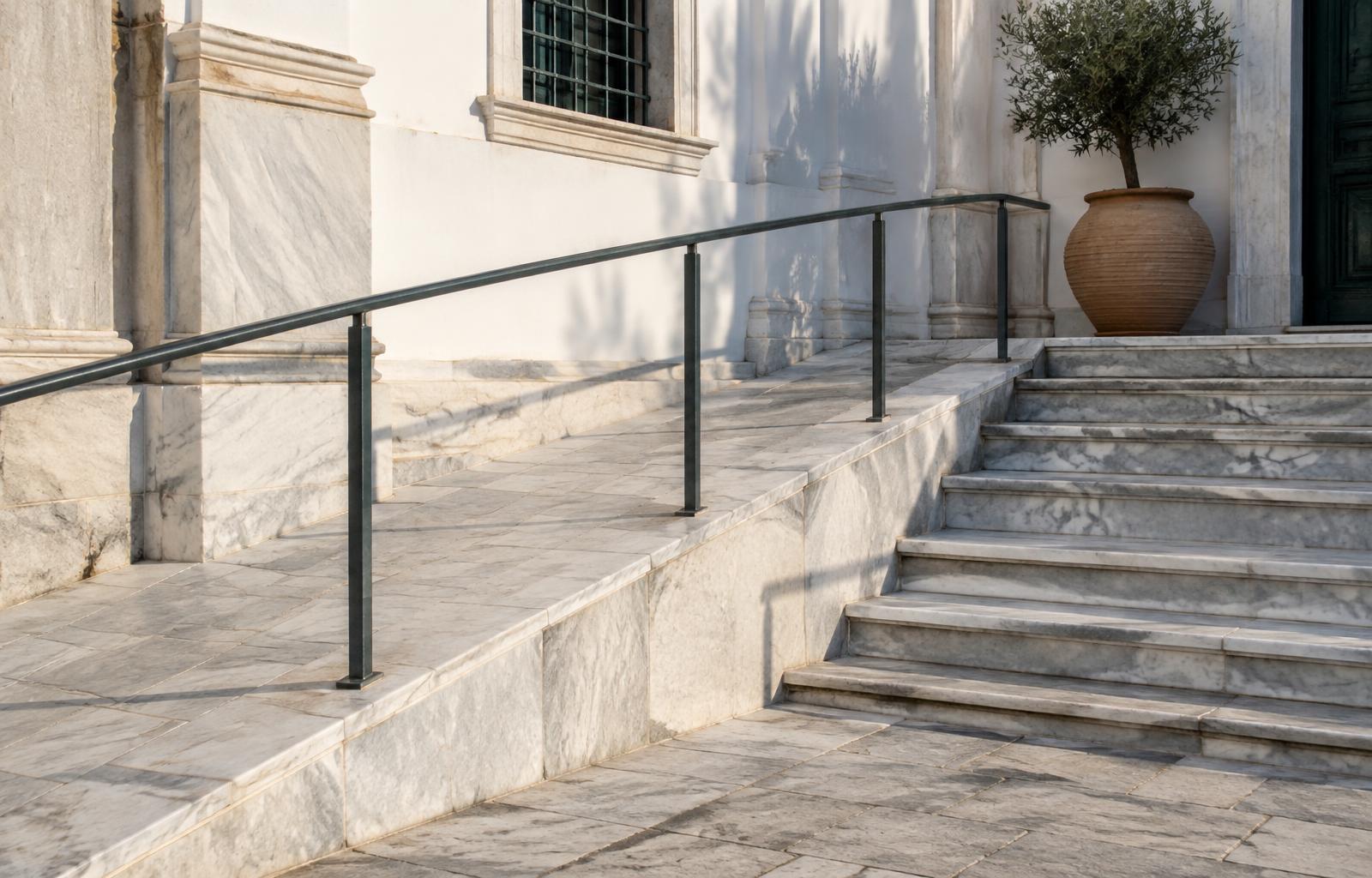
Most barriers don’t look like barriers. A ten-centimetre step. A ramp so steep it takes a second person to get up it. A tactile guide path that leads, with perfect precision, straight into a metal utility cabinet.
The same goes for lifted paving, heavy doors with no room to turn, and websites that load perfectly well but can’t be read by a screen reader. None of it is dramatic on its own. Together, it decides whether a journey is possible at all.
02Compliance and use
From ticking the box to actually working
Infrastructure can be correct on paper and useless in practice. A ramp blocked by parked scooters, a lift that has been “temporarily” out of order for months, an accessible toilet used as a storeroom: all present, none of them doing their job.
Specifications alone don’t close that gap. It takes maintenance, clear responsibility and someone who walks — or rolls — the route before calling it finished.
03Inclusion
Inclusion in practice
Architecture is the most visible side of accessibility, not the only one. Someone can get into an office easily and still never find a place in it. So we look at the whole picture:
- Equal access to work and progression
- Workplaces that work for everyone
- Services and information people can actually understand
- Culture, events and public life
- Tourism and everyday travel
- Digital accessibility
- The right to make your own decisions
04Method
How we approach a barrier
We don’t start with the solution. We start with what we see — and take it in order.
- 01
Observe
We record the problem as it is, on site, with photographs and notes.
- 02
Understand
Who does it affect, when and why? The answer is often not the obvious one.
- 03
Investigate
We check the framework, the standards and who is responsible before proposing anything.
- 04
Collaborate
We talk to authorities, professionals and the people who live with the problem.
- 05
Act realistically
We propose something that can be built, maintained and checked in practice.
05Lived experience
Experience is expertise
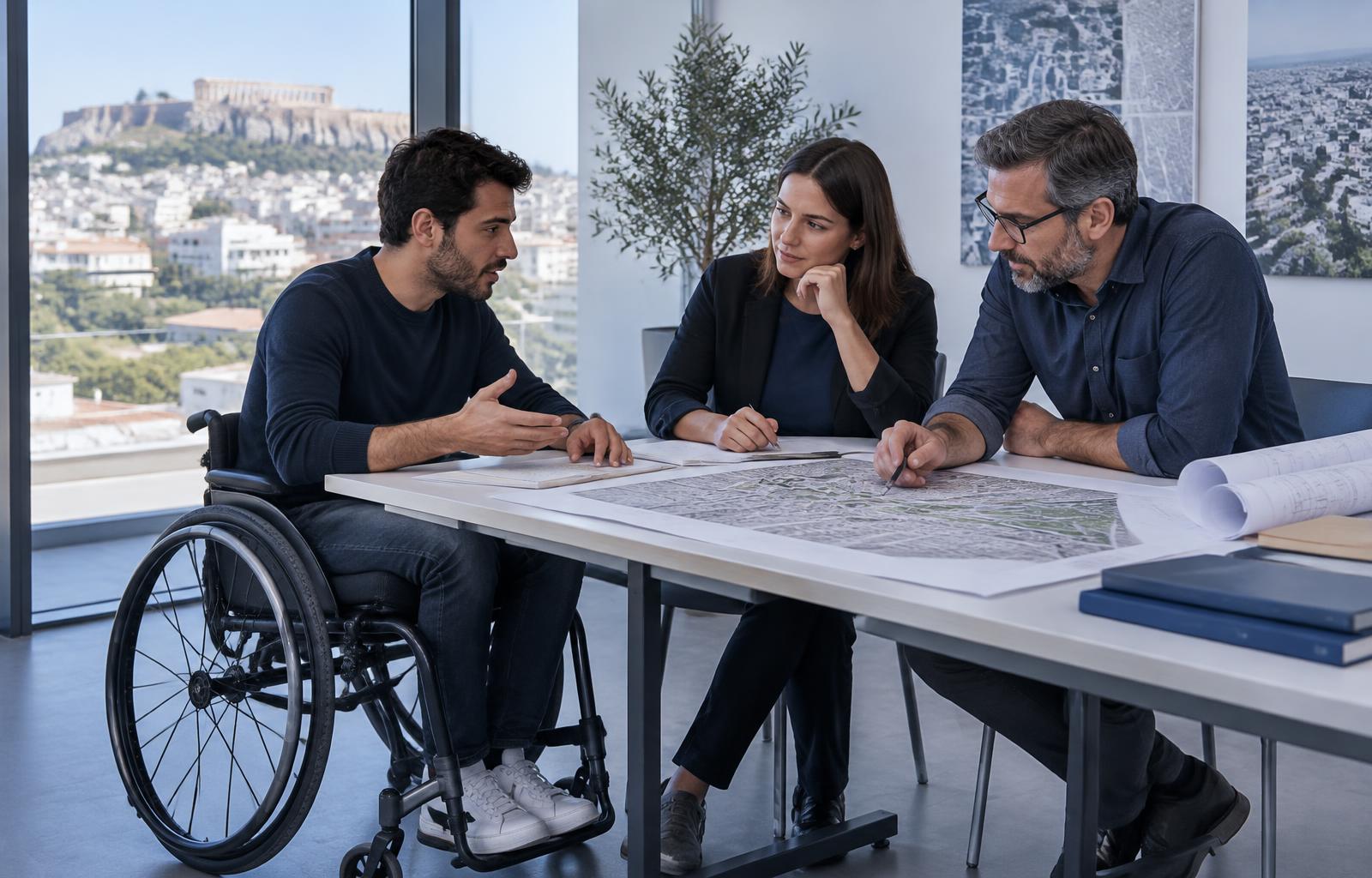
An engineer knows the maximum permitted gradient. Someone who uses a wheelchair every day knows what that gradient feels like at three in the afternoon in August, with the shopping on their lap. We need both kinds of knowledge at the same table.
That’s why disabled people take part in our work as collaborators, not as “cases”. And because disability isn’t one experience, no single person speaks for everyone. We listen to many voices precisely so we don’t make the mistake of hearing only one.
A place that works for everyone isn’t a special case. It’s just good design.
Let’s look at it together
Whether you’re a professional, a public body, a business, or someone who noticed something in your neighbourhood, there’s room for you in this conversation.