
Environment
Nature isn’t the extra. The space we leave for it often is.
A tree on a pavement isn’t decoration. It’s shade, cooler air, shelter for birds and insects, and a patch of ground that still soaks up rain. Every decision about where it’s planted, how much room it gets and what’s laid around it shapes how a city will live for the next fifty years.
For us, the environment isn’t something that happens “outside the city”. It’s part of how our streets, squares and neighbourhoods work.
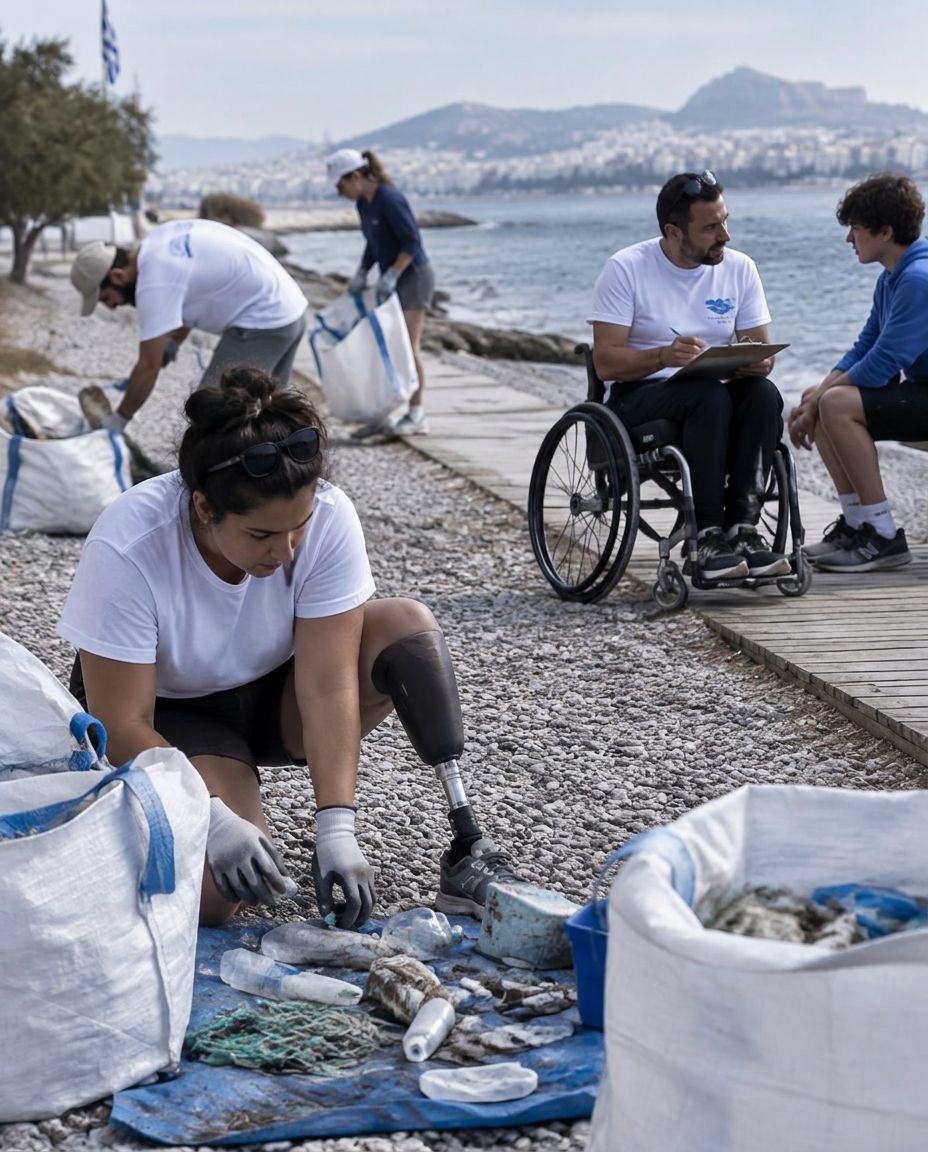
01Urban ecosystem
A city is an ecosystem too
Mature trees, living soil and planting aren’t a luxury for when there’s money left over. A large tree gives in one summer what a sapling will need decades to give. And yet it’s often treated as an obstacle to the plan rather than its starting point.
Urban biodiversity doesn’t live only in parks. It lives in planters, courtyards, vacant plots and in the roots under the pavement. Small spaces that add up to a lot when they’re protected together.
02Below the surface
Below the surface
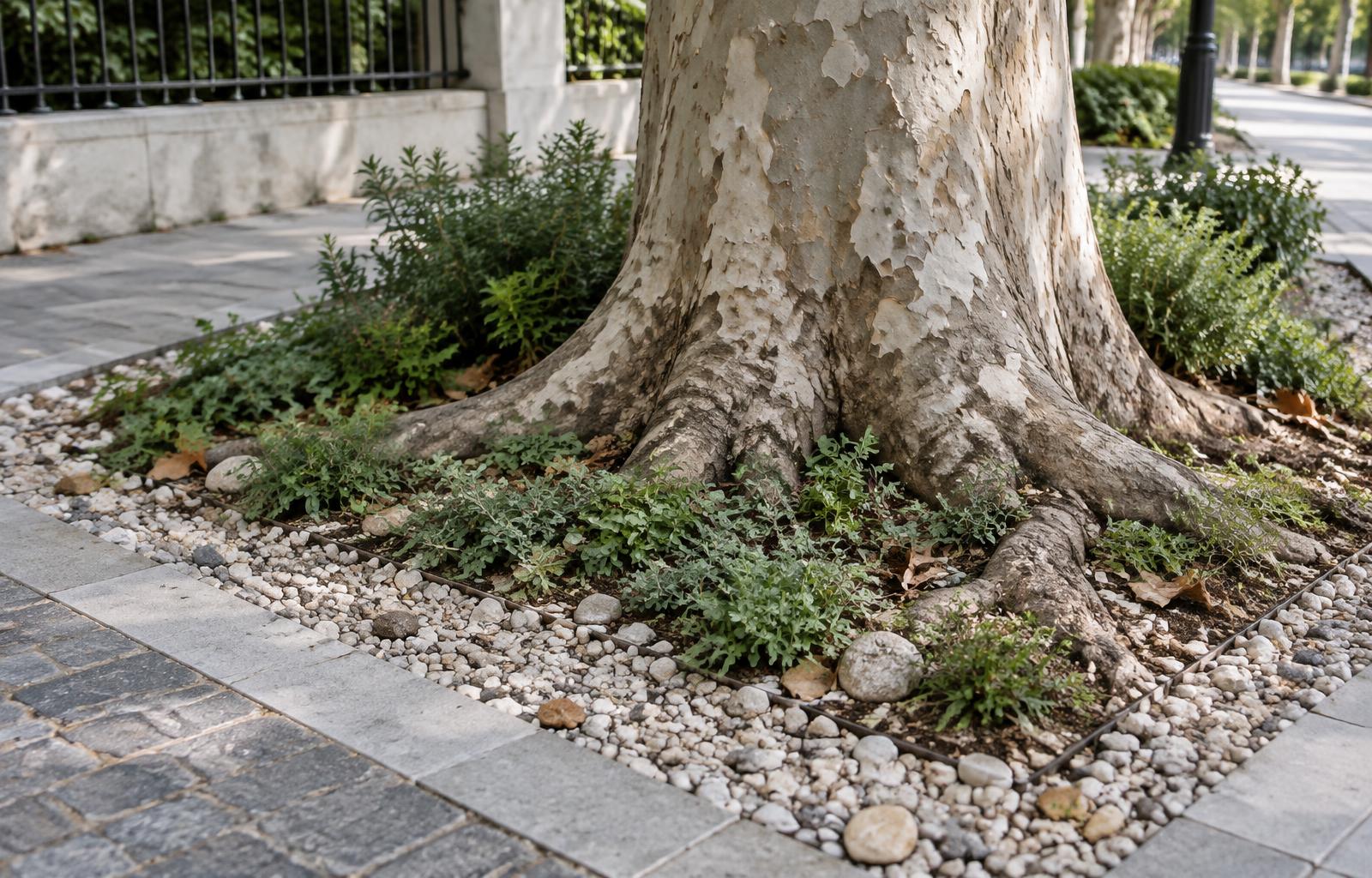
When the paving around a tree starts to lift, the usual conclusion is that the tree is to blame. Usually it’s the space we gave it. Roots go looking for water and air; if the ground around them is sealed, they’ll find them wherever they can — often under the slabs.
The answer is rarely to cut the tree down or pour thicker concrete. It’s a larger planting pit, the right sub-base, a permeable surface and regular maintenance. And one more thing: looking at the real conditions on the ground, not just at how it will look in the photograph.
03Materials
Water, materials and everyday choices
Many environmental decisions are made at the level of detail, by people who may not think of them as “environmental” at all. We want them in the conversation early:
- Permeable surfaces where the ground allows
- Proper drainage, so water doesn’t end up in puddles or basements
- Responsible choice of materials
- Repair before replacement
- Less construction waste
- Maintenance and long-term durability
No material is “green” on its own. A permeable surface only works if it’s been specified for that ground, that use and that maintenance regime.
04Shade
Shade and resilience
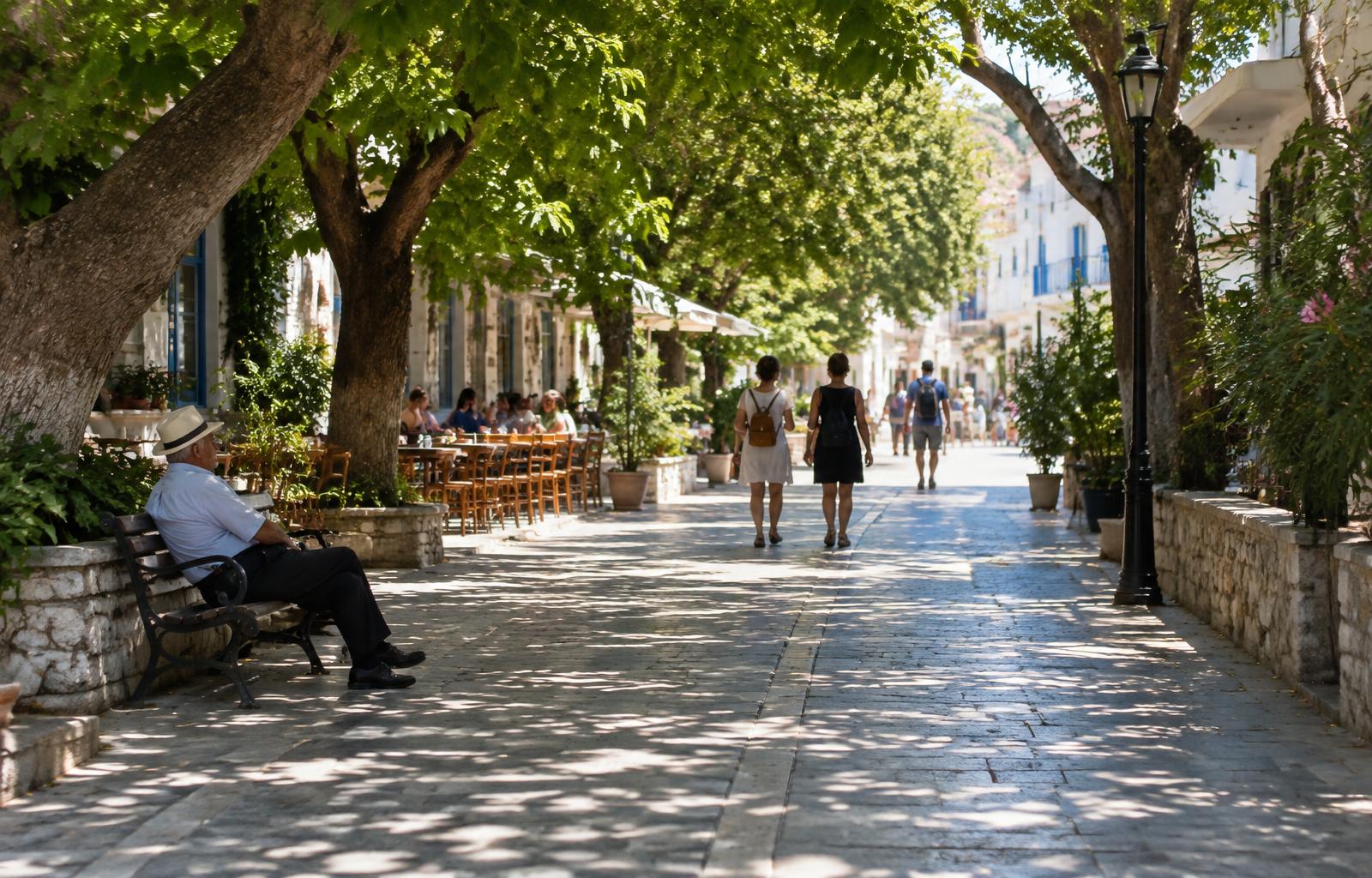
In the Mediterranean, shade isn’t an aesthetic choice. It’s what makes a public space usable from June to September — for older people, for children, for anyone who can’t hurry across a sun-baked square.
Trees, lighter materials, water and a bench that faces the right way all make a city more resilient to heatwaves. It doesn’t always take a major project. It takes thinking about the climate from the start, not as a fix at the end.
05Scale
Small scale, serious thinking
A well-considered small intervention can be more useful than an impressive redesign that changes how a place looks but not how it works. A tree that’s saved, a planter that gets its soil back, a drain that finally does its job.
That doesn’t mean everything is easy or cheap to fix. Some problems need study, time and resources. It means it’s worth understanding what a place really needs before deciding what to build on it.
Nature doesn’t have to retreat for a city to work. It needs room within the city’s design.
Collaboration and participation
Residents, landscape architects, environmental specialists, municipalities and businesses: the more knowledge meets, the better the decisions get.